
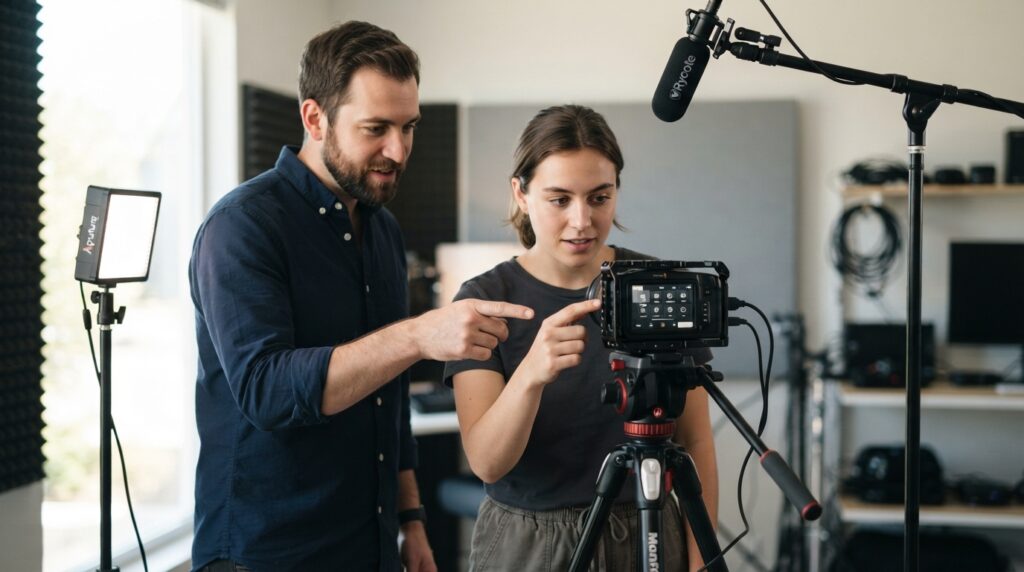
Want to create videos that people will love watching? It’s confusing for most newcomers when it comes to cameras, lighting, and music. That’s fine. Learning is easy and fun with the right Videography Courses for Beginners. Professional teachers will walk you through every step. They have practical knowledge about their course. The first step is understanding camera and smartphone settings. After you’ve completed this, then comes composition and shot framing. Following are the courses on storytelling and editing, and finally there is the scriptwriting course. Each course is tailored to fit you. You can be a teacher, marketer, or artist. The learning is quick and easy.
Fundamentals of Shot Composition
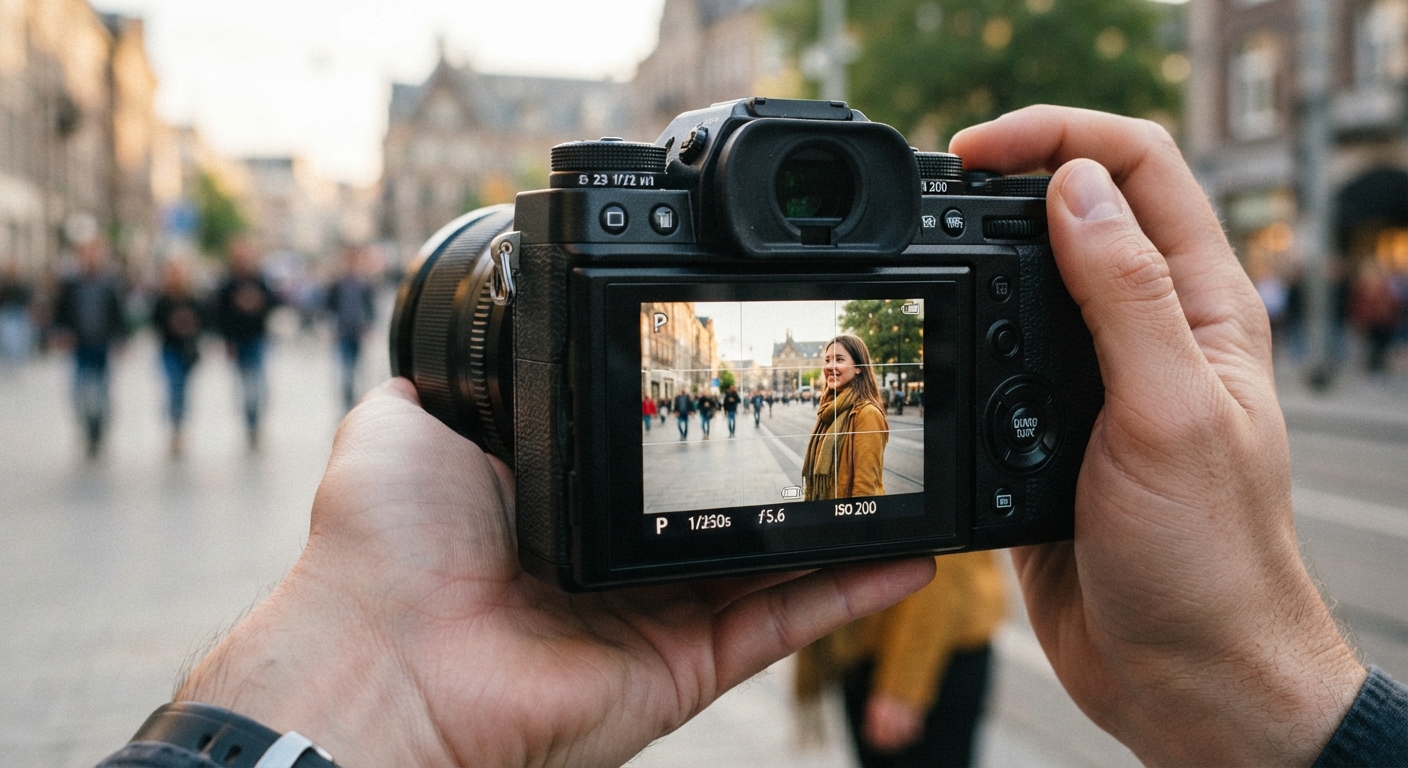
Framing of a scene dictates the way people feel about the scene. An excellent photo can capture viewers’ attention very easily. Subjects are frequently placed dead center by beginners. Simple guidelines like leading lines and the rule of thirds provide better results. Additionally, frame sizes are important. While a broad view establishes the scene, a close-up conveys emotion. Camera angles give a subject more strength or weakness. These concepts are shown on actual sets by trainers. You receive immediate feedback while practicing with real-world scenarios. Later on, smooth motion is added via gimbal and drone movements.
- Rule of thirds for balanced, eye-catching frames
- Close-ups, mid shots, and wide shots for different moods
- High and low angles to show power or weakness
Essentials of Lighting and Sound
What makes professionals different from amateurs when making videos is sound quality and lighting. People find it easy to overlook blurry pictures compared to poor sound quality. A great shot can be spoiled by echo and hissing sounds. Lighting design will teach you how to create mood using windows, lamps, and softboxes. Three-point interview setups are taught to you. Sound is just as important as well. The quality will be affected by room noise, where the microphones are placed, and which ones you use. Shotgun and lavalier microphones are used for different situations. Hours later, it’s easier to record clear voices on set. This is done through demonstrations with an inexpensive kit.
- Three-point setups for sharp interview lighting
- Window light tips for a soft, natural look
- Lavalier and shotgun mics for clear voices
- Room tone recording to remove background hiss
Crucial Camera Settings for Novices
At first, camera settings seem complex. This is a difficulty that all beginners encounter. The basics are where it all starts in good Videography Training. You understand how aperture, shutter speed, ISO, and frame rate relate. All settings change the look of your video. You stop using auto mode once you comprehend them. Smartphone users have the same advantages. These controls are also present in portable gadgets. Practical use of these tools will definitely make it easier to comprehend the definitions. You can compare different equipment with real cameras. Brands like Canon, Sony, and Panasonic make great options.
- Aperture settings that control background blur
- Shutter speed choices for smooth, natural motion
- ISO adjustments for clean footage in dim rooms
- Frame rate and resolution for your project type
Writing a Strong Storytelling Script
Every outstanding video starts on paper. A script helps you communicate clearly and keep your shoot on schedule. Instead of writing for the paper, beginners learn to write for the screen. Spoken words and a few sentences are most effective. Before shooting, storyboards convert ideas into visuals. The structure of a story is just as critical. A climax leaves an impression, a middle makes people curious, and a hook grabs their attention. Your work will be remembered because it has touched people. It’s something that even charities, trainers, and marketers do. On the day of filming, preparation will save you money and time.
- Screen-friendly writing with short, spoken lines.
- Storyboards that plan every scene before filming
- Hook, middle, and ending to hold attention
Cinematic Video Editing Techniques
Raw footage is transformed into a narrative through editing. This topic is well covered in the Beginner’s Guide to Video Production Course. You can learn to cut, trim, and arrange video. Software like Adobe Premiere Pro or DaVinci Resolve makes it easy. Pacing is controlled by transitions and timing. Depth is added by sound effects and music. While grading gives a film-like appearance, color correction corrects uneven tones. Exporting suggestions improve the internet performance of your completed work. With proper finishing, even a smartphone project may have a cinematic vibe. Working with actual footage increases proficiency and speed.
Selecting Appropriate Training in the United Kingdom
Learners in the UK have many possibilities, so make thoughtful decisions. Seek out instructors who have actual broadcast and film experience. Video Mastery travels throughout the nation to teach at your place of employment from its base in Northampton. There are only four delegates per class. Content is customized following a Zoom conversation regarding your abilities and equipment. The organization has an Excellent Trustpilot rating, and its courses are approved by CPD. Hilton hotels host public seminars for lone learners. You can test the style before making a reservation with a complimentary 20-minute preview.
Final words
Excellent videos start with easy steps. You can learn camera settings, framing, lighting, sound, scripting, and editing in an organized manner by taking Videography Courses. Every lesson builds upon the one before it. That knowledge becomes confident filmmaking with practice. Select small groups and instructors with actual industry experience. Video Mastery offers custom content and hands-on training. You can also try a free preview before booking. If necessary, start with a phone. Review clips, shoot frequently, and get better every time. Stories will soon have a polished, cinematic appearance. Take action now to develop your creative abilities.
Subscribe on YouTube for beginner videography tutorials, from camera settings to storytelling.
FAQS
- Is an expensive camera essential for a beginner?
No, that’s not true. All that’s required is a smartphone to learn framing, lighting, sound, and narration.
- How long will it take a beginner to learn the fundamentals?
It takes a beginner one or two days to learn the basics.
- Which editing software should beginners use?
DaVinci Resolve and Adobe Premiere Pro are two good starting points.
- Can filming and editing be learned using a phone?
Yes. The course will include both manual operations and editing software available on phones.
- What qualities should be expected from a UK training provider?
These include free trials, CPD accreditation, smaller class sizes, and experienced trainers.