
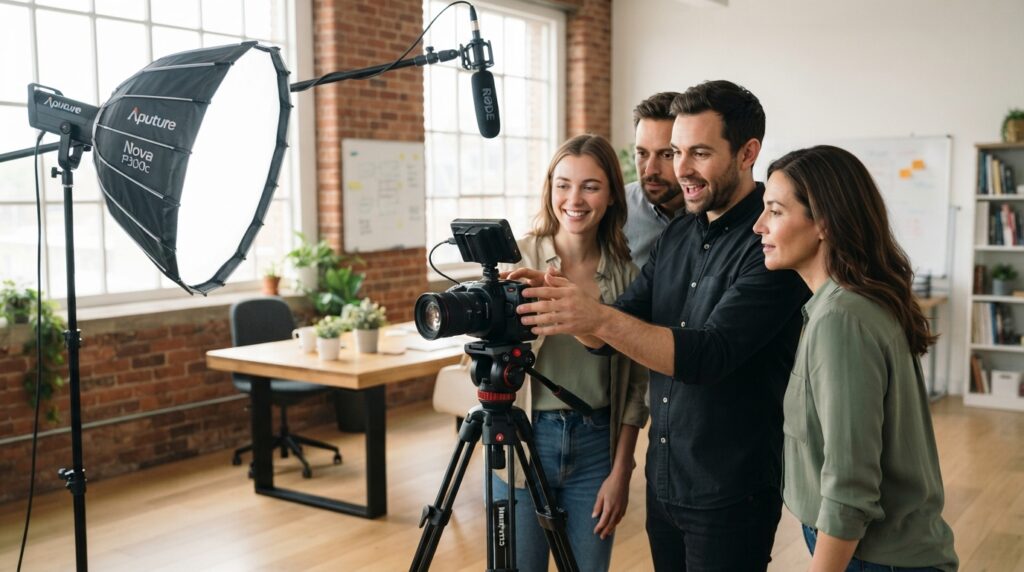
What is needed to produce videos that capture the attention of the viewer and get the message across? Well, filming is not all about using a camera. Additionally, you need the ideal camera methods, excellent audio, and appropriate lighting. Novices and experts alike can learn all these vital skills through the process of Professional Videography Training. They are trained in lighting, motion filming, and sound recording. Confidence during video production is also increased through hands-on instruction. Hands-on lessons catered to various skill levels are available through Video Mastery. These workshops assist students in honing their filmmaking skills and producing captivating business, marketing, and communication videos.
Lighting Methods for Expert Videos
Apart from the visibility of the subjects, proper lighting also ensures that the shot looks complete. Reflectors, natural lighting, and basic lighting setups are studied by the students during indoor filming and interviews. The students know how to handle shadows and the direction of lighting according to the shot. The lighting training helps individuals know how to light up a scene. They learn to use the available equipment effectively. These skills will improve the quality of images without increasing the complexity of the setup. Another advantage of such preparation is maintaining a consistent look of the shots despite changing conditions.
Lighting techniques include:
- Using natural light effectively
- Setting up reflectors and lighting equipment
- Managing shadows and light direction
Crucial Camera Techniques for Producing Videos
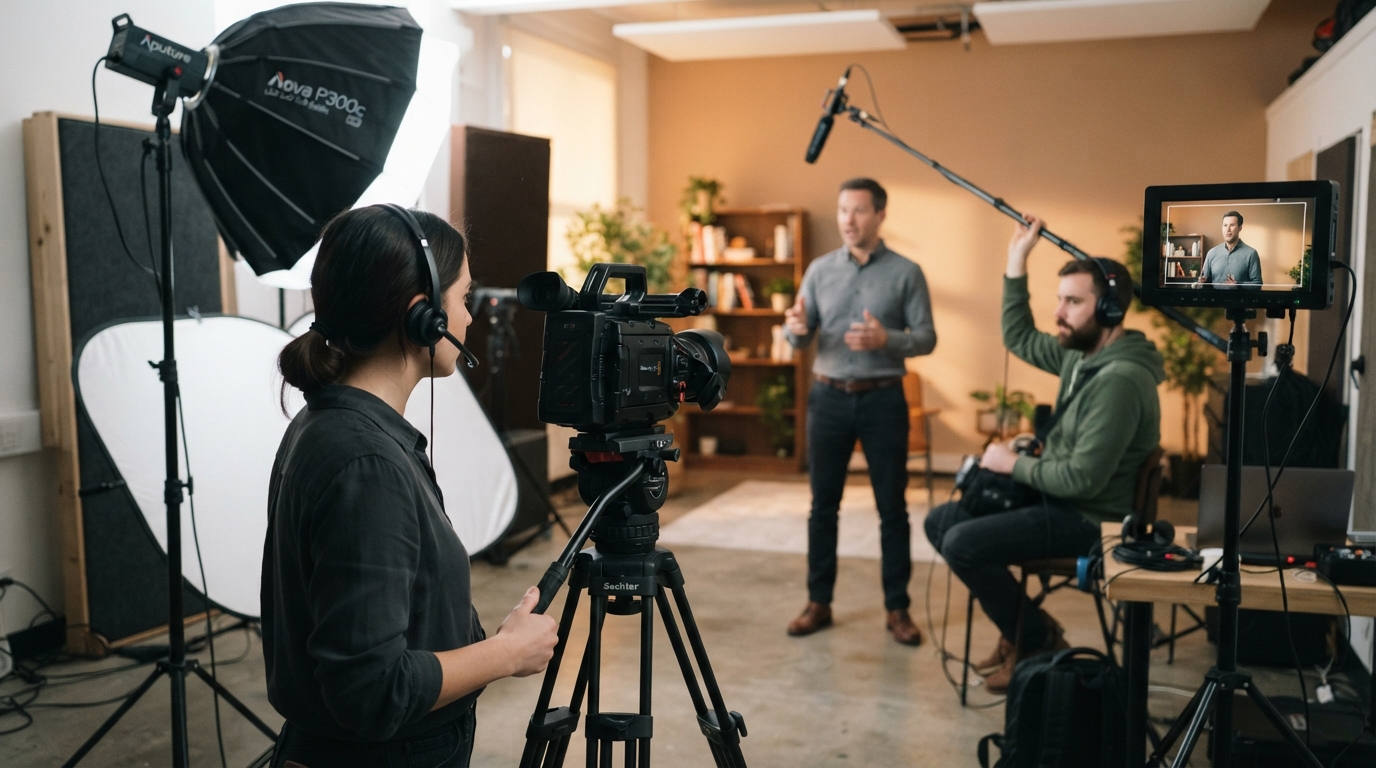
Skills related to handling a camera are helpful in converting basic footage into good-quality visuals. Familiarity with camera settings, focusing, exposure, resolution, and frame rates is the first thing learned. Practice sessions conducted in which the use of different equipment is made, like professional cameras and cell phones. Both beginners and experienced groups willing to improve their technical skills will find help in Videography Courses. Hands-on classes help people make appropriate decisions while shooting and feel confident while handling a camera. These basic skills are useful for making training films and business videos. They also help with interviews and other business projects.
Important skills to learn:
- Camera settings and exposure control
- Focus and frame rate adjustments
- Smartphone and professional camera operation
Techniques for Clear Audio Recording
Clear sound, as well as good visual quality, is another important thing. The video might be difficult to understand because of background noise, incorrect microphone positioning, and different levels. Microphone choice and the way to record sound are included in the training program. The ways to record wild sound and get rid of unnecessary background noise are taught as well. They can learn to listen for problems while recording and check the audio before filming. They can also learn to match sound levels between different shots. This ensures that viewers can hear the dialogue clearly.
Useful areas to practise:
- Choosing suitable microphones
- Controlling unwanted background noise
- Checking sound levels during recording
Camera Movement, Composition, and Angles
The elements of composition and camera angles guide the eye to follow a certain pattern. Although movement gives life to the scene, composition plays a role in making the interview seem realistic. Students will learn about shot sizes, angles, focus, and camera movement. They also understand how these elements help develop the storyline. All these techniques are discussed during production practice, where the students have to use their own equipment. These skills help them create smoother sequences and keep people in the frame. They also help them choose better camera angles.
- Selecting suitable camera angles
- Improving shot composition and framing
- Creating smooth camera movements
Skills in Video Editing and Post-Production
Editing of recorded video allows the creation of a cohesive and compelling story. Learners organize media and select the best takes. Moreover, titles and transitions are used by them to keep viewers focused. Tools such as Adobe Premiere Pro, DaVinci Resolve, and Final Cut, among others, can be incorporated into the coursework. Further, activities such as sound mixing, color correction, exporting, and distribution can also be included in the Video Production Course. The post-production skills enable the groups to improve their videos. Videos can be produced for website content, presentations, and social media sites. The correct procedure will ensure proper delivery of the message.
Expert Filming Methods and Procedures
There is an equal need for camera techniques as well as planning in case of professional shooting. Planning includes the formulation of the message, selecting a proper place, and writing a script. They also arrange each shot before filming. Video Mastery customizes its internal training to the team’s equipment, expertise, and project requirements. This practical method helps businesses create learning and marketing videos. It also improves internal communication with greater confidence and control. Additionally, it promotes a methodical approach from the first setup to the last take.
Bottom lines
Being an expert in videography demands not only skills but also talent and practice. One can enhance any task by gaining further knowledge about the use of cameras, lights, and sound. Additionally, editing abilities aid in transforming unprocessed video into interesting information. Through hands-on activities and supervised teaching, Videography Training provides students with the chance to hone these skills. Both novices and seasoned professionals who wish to improve their producing abilities can benefit from Video Mastery. Participants may produce sharper, more polished videos for marketing, business, education, and communication with consistent practice.
Follow Video Mastery on Facebook to keep learning camera, lighting, and filming skills.
FAQS
- What skills are required for becoming an efficient videographer?
A professional videographer must have the skills of handling lighting, using a camera, and recording clear audio. Good videos can also be made through simple editing and filming.
- How does proper lighting improve the videos?
Good lighting makes people appear natural on camera while shooting. This makes the whole shot look more balanced and reduces any unwanted shadows.
- What equipment helps to create videos?
A camera, tripod, microphone, and lighting are some equipment that is required to create videos. Editing software can also help in creating the video before it is released.
- How can newcomers improve their video skills?
By shooting multiple frames and trying out various angles of shooting, beginners will be able to improve. One can also know the improvements needed through analyzing their work.
- Why is clear audio important in video production?
Conversations can be easily understood due to clear audio recordings. Quality audio recordings can be achieved through the use of a suitable microphone and avoiding noisy areas.